Onn Walkie Talkie Manual PDF: A Comprehensive Guide (Updated 04/01/2026)
Welcome! This detailed PDF manual, updated today – 04/01/2026 – provides a complete user experience for your Onn Walkie Talkie, covering all features and operation.
Explore guides, including a YouTube video, and FCC documentation (2ASCZ2019WT002 & 2APXNLWT001) for optimal 16-mile, 22-channel communication.
Welcome to the world of convenient and reliable communication! Onn Walkie Talkies offer a fantastic solution for staying connected with family and friends during outdoor adventures, events, or simply for everyday use. This manual serves as your comprehensive guide to understanding and maximizing the potential of your new device.
These walkie talkies, boasting a 16-mile range and 22 channels, are designed for ease of use and dependable performance. Whether you’re camping, hiking, coordinating activities at a large event, or ensuring safety during travel, Onn Walkie Talkies provide a clear and instant communication link.

This guide will walk you through every aspect of your walkie talkie, from understanding its components and setting it up, to utilizing advanced features and troubleshooting common issues; Resources like the detailed YouTube video and FCC documentation (IDs 2ASCZ2019WT002 and 2APXNLWT001) are available to further enhance your experience. Prepare to explore a world of seamless communication!
What’s Included in the Box
Upon opening your Onn Walkie Talkie package, you should find the following components carefully included to ensure a seamless setup and immediate communication. Typically, the box contains two Onn Walkie Talkie units, allowing for instant two-way conversations.
Alongside the walkie talkies themselves, you’ll receive a detailed user manual – this very document, available in PDF format and supplemented by online resources like a comprehensive YouTube tutorial. You’ll also find necessary accessories, including belt clips for convenient portability during activities.
Depending on the specific model (referenced by FCC IDs 2ASCZ2019WT002 & 2APXNLWT001), some packages may include batteries. If not, the manual will clearly specify the required battery type for optimal performance. Verify all items are present before proceeding; this ensures you have everything needed to begin enjoying your new communication devices!
Key Features and Specifications
The Onn Walkie Talkie boasts an impressive range of up to 16 miles, making it ideal for outdoor adventures, events, or simply staying connected over distance. It features 22 channels, providing a wide selection to minimize interference and find a clear communication path.
Key features include a user-friendly interface, easy channel selection, and adjustable volume control. The walkie talkies are designed for portability with included belt clips. The device supports VOX (Voice Operated Exchange) functionality, enabling hands-free operation. A scan function quickly searches for active channels, and a channel lock feature prevents accidental changes.
Specifications, detailed in the PDF manual and FCC documentation (2ASCZ2019WT002 & 2APXNLWT001), cover power requirements, operating temperature, and dimensions. Online resources, like the YouTube guide, further illustrate these capabilities, ensuring optimal performance and user satisfaction.

Understanding the Walkie Talkie Components
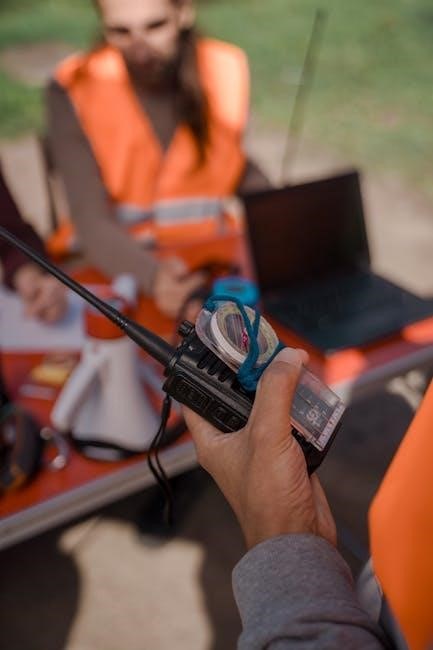
Explore the device! This section of the Onn Walkie Talkie manual PDF details each part – antenna, speaker, microphone, buttons, and LCD display – for optimal use.
Antenna Function and Adjustment
The antenna is crucial for maximizing your Onn Walkie Talkie’s range and signal clarity, as detailed in the comprehensive manual PDF. It transmits and receives radio waves, enabling communication over distances up to 16 miles, depending on terrain and obstructions.
Proper adjustment is key: Always ensure the antenna is securely attached. For optimal performance, keep the antenna upright and away from your body. Avoid touching the antenna during transmission or reception, as this can interfere with the signal.
Damage inspection: Regularly inspect the antenna for any signs of damage, such as bends or breaks. A damaged antenna will significantly reduce the walkie talkie’s effectiveness. Refer to the manual PDF for guidance on antenna replacement if necessary. Maintaining a straight and undamaged antenna ensures the best possible communication experience, as outlined in the user documentation.
Speaker and Microphone Details

Clear communication relies heavily on the Onn Walkie Talkie’s speaker and microphone, as detailed within the complete user manual PDF. The speaker delivers incoming transmissions with clarity, while the microphone accurately captures your voice for outgoing communication.
Speaker volume control: Adjust the volume using the designated control buttons to a comfortable level. Excessive volume can cause distortion or discomfort. The manual PDF provides specific instructions on volume adjustment for optimal audio quality.
Microphone positioning: Speak directly into the microphone, maintaining a distance of approximately 2-3 inches. Avoid covering the microphone during transmission, as this will muffle your voice. Regularly check for obstructions. Proper microphone technique, as described in the PDF, ensures your messages are heard clearly. Maintaining these components is vital for effective use.
Control Buttons and Their Functions
Understanding the controls is key to operating your Onn Walkie Talkie effectively, as outlined in the comprehensive user manual PDF. Each button performs a specific function, enabling you to navigate channels, adjust volume, and initiate transmissions.
PTT (Push-to-Talk) button: Press and hold this button to transmit your voice. Release to listen for incoming messages. The manual PDF details proper PTT etiquette for clear communication.
Channel selector: Rotate the dial to choose from 22 available channels. The PDF explains channel selection best practices to minimize interference. Menu/Set button: Accesses advanced settings like VOX and channel lock. Monitor button: Allows you to listen for weak signals. The PDF provides detailed instructions for each button’s operation, ensuring a seamless user experience.
LCD Display Overview
The LCD display on your Onn Walkie Talkie provides crucial information at a glance, as thoroughly explained in the user manual PDF. Familiarizing yourself with these indicators will enhance your operational efficiency.
Channel Number: Clearly displays the currently selected channel from the available 22 options. Battery Level Indicator: Visually represents the remaining battery life, alerting you when a recharge or battery replacement is needed. Signal Strength Indicator: Shows the strength of the received signal, helping you optimize your position for better communication.
Transmit Indicator: Illuminates when the PTT button is pressed, confirming active transmission. Receive Indicator: Lights up when receiving a signal. The PDF offers a detailed diagram and explanation of each icon, ensuring you fully understand the information presented on the display.

Setting Up Your Onn Walkie Talkie
Begin with ease! The Onn Walkie Talkie manual PDF guides you through battery installation, channel selection, volume adjustment, and utilizing the call button for instant communication.
Installing Batteries (and Battery Life Expectancy)
Powering Your Device: The Onn Walkie Talkie requires batteries for operation, and the manual PDF provides clear instructions for correct installation. Typically, these units utilize AAA batteries – the exact number needed will be specified within the documentation, often ranging from 3 to 6 depending on the model (WT001, WT002, WT003).
Battery Installation Steps: Locate the battery compartment, usually on the back or bottom of the walkie talkie. Slide the compartment cover open, insert the batteries according to the polarity markings (+ and -), and securely close the cover. Incorrect battery insertion will prevent the device from powering on.
Battery Life: Expect varying battery life depending on usage patterns. Continuous transmission will drain batteries faster than standby mode. Generally, a fresh set of AAA batteries should provide approximately 8-12 hours of typical use. For extended operation, consider using rechargeable batteries. The manual PDF may offer specific battery life estimates based on different operating conditions.
Important Note: Always remove batteries if the walkie talkie will not be used for an extended period to prevent corrosion and damage.
Channel Selection and Usage

Understanding Channels: Your Onn Walkie Talkie (models WT001, WT002, WT003) features 22 channels, offering a wide range of frequencies for communication. The manual PDF details how to navigate and select these channels using the control buttons or rotary dial, depending on your specific model.
Selecting a Channel: Rotate the channel selector knob or press the channel up/down buttons until you reach your desired channel number. It’s recommended to check for existing activity on a channel before transmitting to avoid interference. A clear channel will have minimal background noise.
Channel Usage Tips: For private conversations, choose a less crowded channel. In areas with high walkie talkie traffic, experiment with different channels to find one with minimal interference. The manual PDF may suggest specific channels for common uses, such as family communication or outdoor activities. Remember that some channels may be reserved for emergency use.
Important: Refer to the PDF for FCC regulations regarding channel usage in your area.
Setting the Volume Level
Adjusting Volume: The Onn Walkie Talkie manual PDF provides clear instructions on adjusting the speaker volume to a comfortable level. Typically, this is achieved using dedicated volume up and down buttons located on the device. These buttons control the loudness of incoming transmissions.
Volume Control Details: The manual details a graduated volume scale, allowing for precise adjustment. Start with a low volume setting and gradually increase it until you can clearly hear incoming messages. Avoid setting the volume too high, as this can cause distortion or discomfort.
Optimizing Audio: Consider your surrounding environment when setting the volume. Noisy environments require a higher volume setting than quiet ones. The PDF may also include troubleshooting tips for low volume or distorted audio. Ensure the speaker is not obstructed for optimal sound clarity.
Caution: Prolonged exposure to loud sounds can damage your hearing. Use the lowest comfortable volume setting.
Using the Call Button
Initiating Communication: The Onn Walkie Talkie manual PDF explains the function of the call button, typically used to initiate a transmission to another user. Pressing and holding this button activates the microphone and sends your voice signal.
PTT Operation: This function is often referred to as “Push-to-Talk” (PTT). The manual details the importance of clearly speaking into the microphone while the button is depressed. Releasing the button switches the device back to receive mode.
Call Button Features: Some models may feature a call button with additional functionalities, such as sending a pre-defined alert tone before voice transmission. The PDF will illustrate these features and their corresponding usage.
Proper Etiquette: The manual may also suggest proper communication etiquette, such as identifying yourself before speaking and avoiding unnecessary transmissions. Always check the channel before transmitting.

Advanced Features & Operation
Explore beyond basics! The Onn Walkie Talkie manual PDF details VOX, scan, monitor, and channel lock functions, enhancing your communication experience and control.
VOX (Voice Operated Exchange) Function
Understanding VOX: The Voice Operated Exchange (VOX) function on your Onn Walkie Talkie allows for hands-free operation. As detailed in the user manual PDF, VOX automatically transmits when it detects sound – your voice – eliminating the need to press the talk button.
Activation & Sensitivity: To activate VOX, consult the manual for specific button combinations, as these can vary by model (WT001, WT002, WT003). Crucially, the manual explains how to adjust the VOX sensitivity level. Lower sensitivity requires a louder voice to transmit, reducing false activations from background noise. Higher sensitivity picks up quieter sounds, but increases the risk of unintended transmissions.
Optimal Use: The Onn Walkie Talkie manual PDF recommends testing VOX in a quiet environment to determine the ideal sensitivity setting for your typical usage. Remember that strong winds or loud ambient sounds can still trigger transmission, even with adjusted settings. For best results, speak clearly and directly into the microphone when using VOX.
Scan Function – How to Use
Initiating a Scan: The Scan function, thoroughly explained in the Onn Walkie Talkie manual PDF, allows you to automatically search for activity across all 22 channels. To initiate a scan, typically you’ll press and hold the ‘Scan’ or ‘Monitor’ button (refer to your specific model’s button layout in the manual).
How it Works: During a scan, the walkie talkie will cycle through each channel, pausing briefly on any channel where activity is detected. The manual details that this pause duration is usually a few seconds. If a signal is found, the scan will stop on that channel, alerting you to potential communication.
Resuming the Scan: After pausing on an active channel, the scan will either automatically resume after a set time, or you may need to briefly press the ‘Scan’ button again to continue searching. The Onn Walkie Talkie PDF manual provides precise instructions for your model (WT001, WT002, WT003) to ensure efficient channel monitoring.
Monitor Function Explained
Activating the Monitor Function: The Onn Walkie Talkie manual PDF details the Monitor function as a way to listen for weak or distant signals that might not trigger the squelch circuit. Typically, you activate it by pressing and holding the ‘Monitor’ button – often the same button used for scanning – as outlined in the user guide.
What You’ll Hear: When Monitor is active, you’ll hear all activity on the current channel, including static and any faint transmissions. This is useful for determining if a channel is truly clear or if there’s weak signal interference. The manual emphasizes that constant static is normal in Monitor mode.
Using with Scanning: Some models combine Monitor with the Scan function. The PDF manual (for WT001, WT002, WT003) explains how to use both features together to locate distant users. Remember to release the button to return to normal operation and filter out unwanted noise.
Channel Lock Function
Preventing Accidental Changes: The Onn Walkie Talkie manual PDF highlights the Channel Lock function as a crucial feature for maintaining consistent communication. This prevents accidental channel changes, especially in busy environments or during group activities. Refer to your specific model’s instructions (WT001, WT002, WT003) as activation methods vary.
How to Engage: Typically, you’ll lock a channel by pressing and holding a designated button – often the ‘Menu’ or ‘PTT’ button – while the desired channel is selected. The LCD display will usually indicate when the channel is locked, often with a small lock icon.
Unlocking Channels: To unlock, repeat the same process. The manual stresses the importance of unlocking the channel when you need to switch frequencies. This ensures flexibility and allows you to communicate with different groups or individuals. Always consult the PDF for precise steps.

Troubleshooting Common Issues
Facing problems? The Onn Walkie Talkie manual PDF offers solutions for issues like no power, poor reception, static, and button malfunctions – ensuring smooth operation.
No Power/Walkie Talkie Won’t Turn On
Is your Onn Walkie Talkie unresponsive? First, verify the batteries are correctly installed, observing proper polarity as detailed in the manual PDF. Ensure batteries aren’t depleted; replace them with fresh ones of the correct type.
Check the battery compartment for any corrosion or obstructions preventing a solid connection. If using rechargeable batteries, confirm they are fully charged and compatible with the device. A faulty power source is a common issue.
Consult the Onn Walkie Talkie manual PDF for specific troubleshooting steps related to power failures. It may include a reset procedure or further diagnostic checks. If the problem persists after these steps, contact customer support for assistance, referencing your model number (found within the PDF).
Remember to always refer to the official documentation for the most accurate and safe troubleshooting guidance.
Poor Reception/Short Range
Experiencing limited range or weak reception with your Onn Walkie Talkie? The manual PDF highlights several potential causes. Obstacles like buildings, trees, and hills significantly impact signal strength. Try relocating to a higher, unobstructed position.
Ensure the antenna is fully extended and undamaged – refer to the manual PDF for proper antenna adjustment techniques. Interference from other electronic devices can also reduce range. Move away from potential sources of interference.
Verify you and the other walkie talkie user are on the same channel. Incorrect channel selection is a frequent cause of poor communication. The Onn Walkie Talkie manual PDF details channel selection procedures.
Consider battery levels; low batteries can reduce transmission power. For optimal performance, consult the PDF for recommended operating conditions and troubleshooting tips.
Static or Interference Issues
Encountering static or unwanted noise during communication with your Onn Walkie Talkie? The comprehensive manual PDF addresses this common issue. Interference can stem from various sources, including other radio devices, electrical equipment, and even weather conditions.
Try changing channels to find a clearer frequency. The Onn Walkie Talkie offers 22 channels; the manual PDF details how to efficiently scan and select optimal channels. Ensure other users are also on the same channel.
Reduce proximity to potential interference sources like computers, microwaves, and power lines. The manual PDF suggests maintaining a safe distance for clear transmission.
Utilize the monitor function (explained in the manual PDF) to listen for activity on a channel before transmitting, minimizing interruptions. Proper antenna adjustment, as detailed in the PDF, can also improve signal clarity.
Button Malfunctions
Experiencing unresponsive or erratic behavior from the buttons on your Onn Walkie Talkie? The detailed manual PDF provides troubleshooting steps to address these issues. First, ensure the batteries are fresh and correctly installed, as low power can sometimes cause button functionality problems.
Inspect the buttons for any physical obstructions like dirt or debris. Gently cleaning around the buttons with a soft, dry cloth may resolve the issue. The manual PDF cautions against using liquids.
If a specific button consistently malfunctions, try resetting the walkie talkie. The manual PDF outlines the reset procedure, which typically involves removing and reinserting the batteries.
For persistent malfunctions, consult the manual PDF’s contact information for Auctus Technologies (FCC ID 2ASCZ2019WT002) or ASAP Technology (FCC ID 2APXNLWT001) for potential repair or replacement options.
Safety Information and FCC Compliance
Prioritize safety! This Onn Walkie Talkie manual PDF details crucial precautions, proper battery disposal, and FCC compliance information (2ASCZ2019WT002 & 2APXNLWT001).
Important Safety Precautions

Read carefully before use! To ensure safe operation of your Onn Walkie Talkie, adhere to these vital precautions. Avoid using the device while driving or in any situation where attention should be focused on primary tasks. Keep the walkie talkie away from water and extreme temperatures, as this can cause damage or malfunction.
Antenna safety is key: Never use a damaged antenna, and avoid touching it during transmission. Maintain a safe distance from the body when transmitting. Children should be supervised when using the device. Do not attempt to disassemble or modify the walkie talkie, as this will void the warranty and could pose a safety hazard.
Battery handling is crucial: Only use the specified battery type. Incorrect battery usage can lead to leakage, overheating, or explosion. Dispose of used batteries responsibly, following local regulations. This manual PDF provides further details on safe operation and compliance.
FCC ID: 2ASCZ2019WT002 & 2APXNLWT001
Compliance Information: This Onn Walkie Talkie operates under Federal Communications Commission (FCC) guidelines. It has been tested and found to comply with the standards for FCC Part 15 digital devices. Two FCC IDs are associated with this product: 2ASCZ2019WT002, assigned to Auctus Technologies Co., Ltd., and 2APXNLWT001, assigned to ASAP Technology(Jiangxi).
Important Notice: These IDs confirm that the device meets specific electromagnetic interference standards. Any unauthorized modifications to the walkie talkie could void the user’s authority to operate it. Detailed FCC documentation, including the user manual (available via fccid.io), provides comprehensive information regarding compliance and testing procedures.
Further Details: Refer to the complete FCC filings for technical specifications and testing results. This ensures adherence to regulatory requirements and responsible radio frequency usage.
Disposal of Batteries
Responsible Battery Disposal: Proper battery disposal is crucial for environmental protection and safety. Do not dispose of batteries with general household waste. Batteries contain potentially harmful materials that can contaminate the environment if improperly handled.
Recycling Options: We strongly encourage you to recycle batteries whenever possible. Many local communities offer battery recycling programs or collection sites. Check with your local waste management authorities for information on designated drop-off locations.
Battery Types: This Onn Walkie Talkie likely uses standard alkaline or rechargeable batteries. Regardless of the type, always follow local regulations for battery disposal. Improper disposal can lead to environmental damage and potential health hazards. Prioritize responsible recycling practices to minimize your environmental impact.